
Numbers Without Stories Are Pointless
Going beyond what your dashboard tells you
EXECUTIVE SUMMARY:Customer research is the practice of gathering and analyzing information about current and potential customers to understand their needs, motivations, and pain points. It works in two modes. Quantitative research measures customers through analytics, surveys, and scores like Net Promoter Score, while qualitative research listens to them through interviews and focus groups. The strongest approach cycles between the two continuously, using interviews to surface themes, surveys to validate those themes at scale, then returning to interviews to explain what the numbers mean. Companies that research regularly report significantly higher growth and profitability than those that do not, and consumers view brands more favorably when those brands ask for feedback and act on it.You can measure almost everything now. Bounce rates, session times, Net Promoter Scores, cart abandonment tracked to the percentage point. Most companies hold more data about their customers than they know what to do with. Numbers tell you what happened. On their own, they do not tell you who your customer is and what they are thinking. Finding out what your customers actually need means asking more structured questions that go beyond raw numbers.
The Reason for Research
Let’s take a step back. Who even are your customers? And how do you discover their core needs?
There is an entire field dedicated to customer research, the process of gathering and analyzing information about current and potential customers to understand their needs, preferences, behaviors, motivations, and pain points. You may also hear terms such as customer insights and customer strategy used to describe this work. Many companies have even created chief customer officer roles, executives whose primary responsibility is to empathize with and advocate for customer needs. Their mandate is to represent the voice of the customer in decision-making and, in doing so, drive stronger business outcomes.
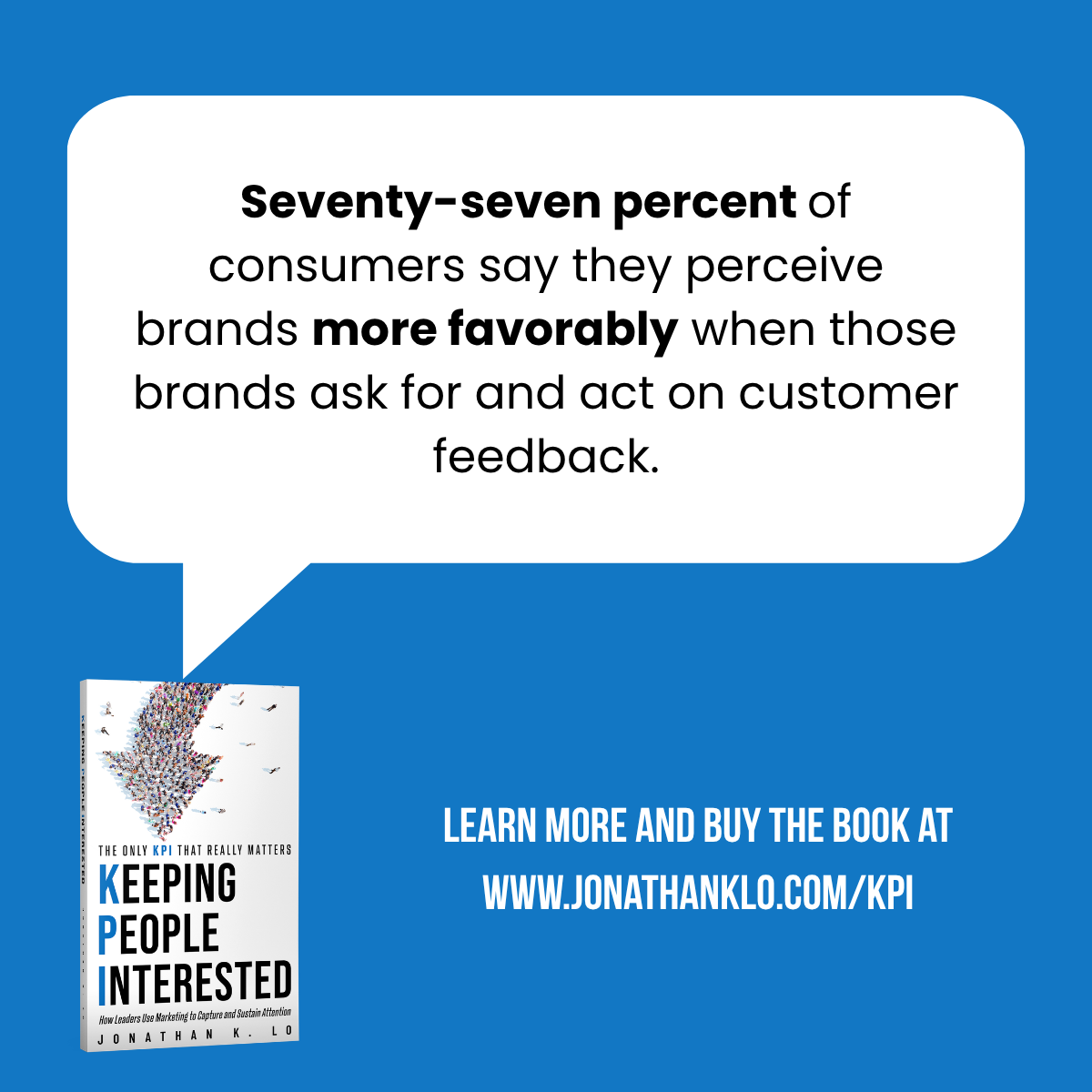
Studies confirm that this intentional focus pays off. Organizations that conduct regular customer research experience 30.7% growth and 19.9% profitability, compared to just 2.8% growth and 11.0% profitability among companies that do not invest in research. The impact is not only financial. There is also a reputational benefit: Seventy-seven percent of consumers say they perceive brands more favorably when those brands ask for and act on customer feedback. In other words, customer research not only makes you smarter and more profitable, but it also makes you more trusted.
The Qual-Quant Feedback Loop
While working at home furnishings retailer Overstock, I had the privilege of partnering with Bain & Company, one of the top three strategy consulting firms in the world, on a half-year customer research project. The work was transformative. The initiative we launched went on to deliver twelve quarters of positive EBITDA (Earnings Before Interest, Taxes, Depreciation, and Amortization), a common measure of operational profitability.
At the core of this success was a disciplined approach to customer research. It was not just the expertise of Bain & Company that made the difference, but also the leadership in our own team. Our vice president of customer insights, who had built a successful career in both the consumer packaged goods and enterprise technology industries, played a pivotal role in shaping the work.
Between the consultants and a team of top-tier internal research specialists, we executed on a process that moved continuously between qualitative and quantitative research methods, each informing the other. This process, which I call the qual-quant feedback loop, never stops because there is always more to learn, deeper insights to uncover, and new ways to apply those insights across the business.
Quantitative research involves gathering numbers. This might include hard data, such as website analytics, or softer data, such as survey responses. If you have ever been asked to rate, on a scale of 1 to 10, how likely you are to recommend a company, you have participated in quantitative research. That single question generates a Net Promoter Score (NPS), one of the most widely used measures of brand sentiment.
Qualitative research refers to information that is not numerical, most often collected through interviews. These can take the form of one-on-one conversations or group discussions. Focus groups, for example, are a structured type of qualitative research. If you have seen the HBO comedy series Silicon Valley, there is a memorable scene where executives sit behind a two-way mirror and cringe at blunt customer feedback. That moment is a caricature, but it illustrates the dynamic of how focus groups often unfold.
Put simply, qualitative research means listening to customers, while quantitative research means measuring them. The two are most powerful when combined. You might begin with qualitative interviews to uncover themes, use quantitative surveys to validate those findings at scale, then return to qualitative work to explore the why behind the numbers. The qual-quant feedback loop continues, producing insights and implications with every pass.
Practical Tips for Research
If you’re just getting started, I recommend beginning with qualitative research through customer interviews. As a best practice, the most reliable insights come from people who do not know which company is asking the questions because anonymity reduces the risk of bias. You want participants to share candid opinions, not polite or filtered feedback.
To find these participants, there are research platforms that connect you with people who have opted in to be interviewed. Dscout, User Interviews, and Respondent allow you to set filters, such as demographics, shopping habits, or professional roles, then recruit and schedule interviews with qualified participants.
For quantitative research, you can turn to survey panels offered by providers such as Qualtrics, SurveyMonkey, and Dynata. These platforms allow you to pay per respondent and target by criteria, such as age, region, or occupation. This gives you access to a broader and more objective pool of people whose perspectives will sharpen your understanding of what really matters.
Wrapping It All Up
A Net Promoter Score tells you a customer rated you a six. It does not tell you that she almost bought twice, got confused by the shipping page, and gave up. You need both halves. The number tells you something is wrong and how widespread it is. The conversation tells you what it actually is, and that is the part you can fix.
Look at the last metric that moved in the wrong direction. Do you know the story behind it?
Interested in more?
This article’s content was adapted from the book Keeping People Interested: How Leaders Use Marketing to Capture and Sustain Attention, available as a paperback, ebook, and audiobook today.
