
Cut through the noise and think like a strategist. Mental models, strategy frameworks, and decision tools to help you grow smarter, faster.
The Value-Price-Cost (VPC) Model
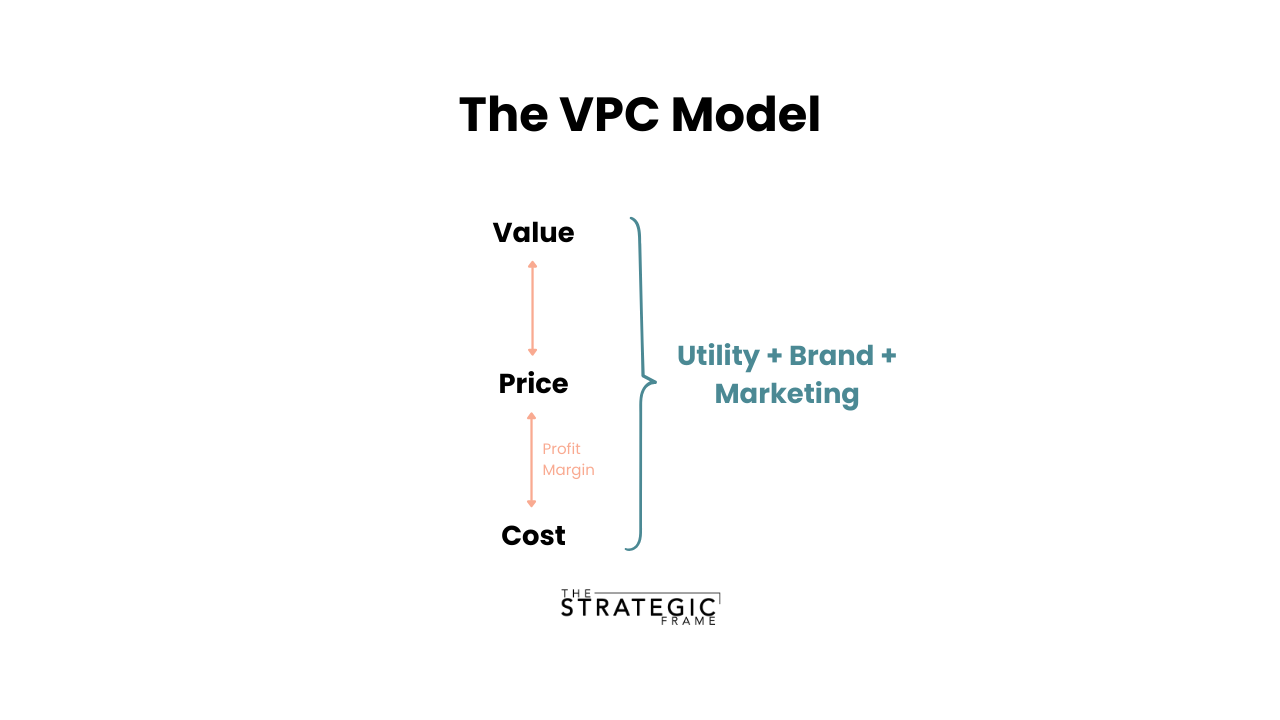
Most leaders think of pricing as a matter of costs and margins, but this overlooks the customer’s perception of value. The Value-Price-Cost (VPC) Model reframes pricing as a ladder: cost at the bottom, price in the middle, and perceived value at the top. Profitability comes from keeping price above cost, but sustainable growth comes from raising perceived value. By investing in brand and marketing, businesses can create goodwill, loyalty, and repeat purchases. This turns pricing into both a financial and strategic advantage.
The Benjamin Franklin Effect
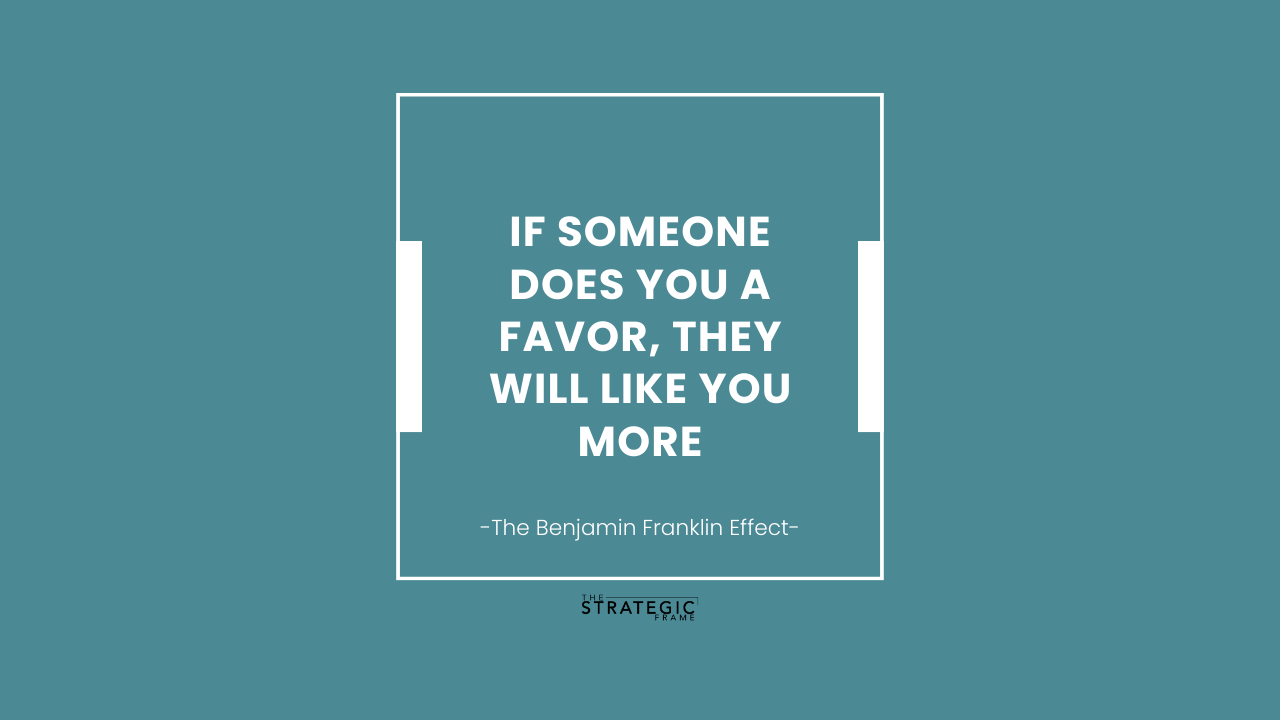
The Benjamin Franklin Effect is a psychological principle showing that people who do you a favor tend to like you more. Research and history, from Franklin himself to modern studies, show that small, social favors can strengthen relationships and loyalty. Practically, asking for a minor favor or offering someone the chance to help can build goodwill in both personal and professional contexts.
SWOT / TOWS
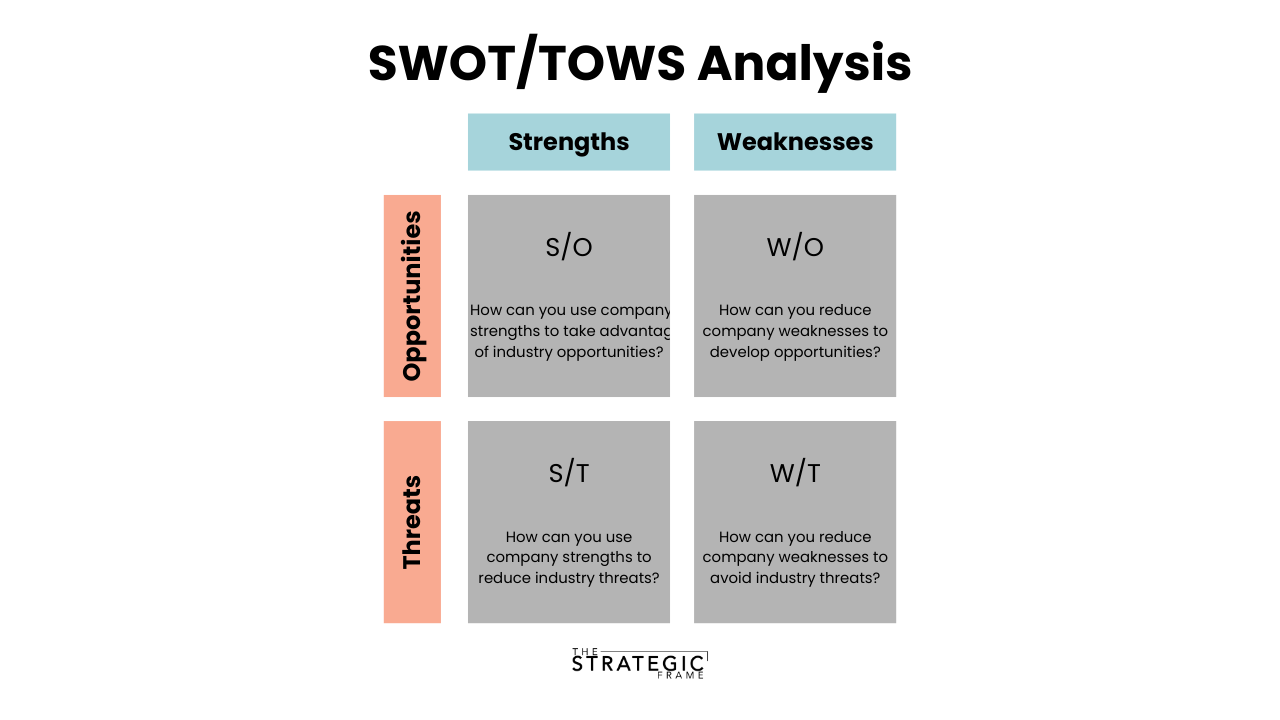
Most business leaders are familiar with SWOT, a tool for identifying internal strengths and weaknesses alongside external opportunities and threats. The challenge is that SWOT often stops at analysis without providing a clear path forward. TOWS takes the same elements and finds the intersections, pairing internal and external factors to generate actionable strategies. By moving from observation to implication, TOWS helps leaders reduce risks, seize opportunities, and align strengths and weaknesses with the realities of their environment.
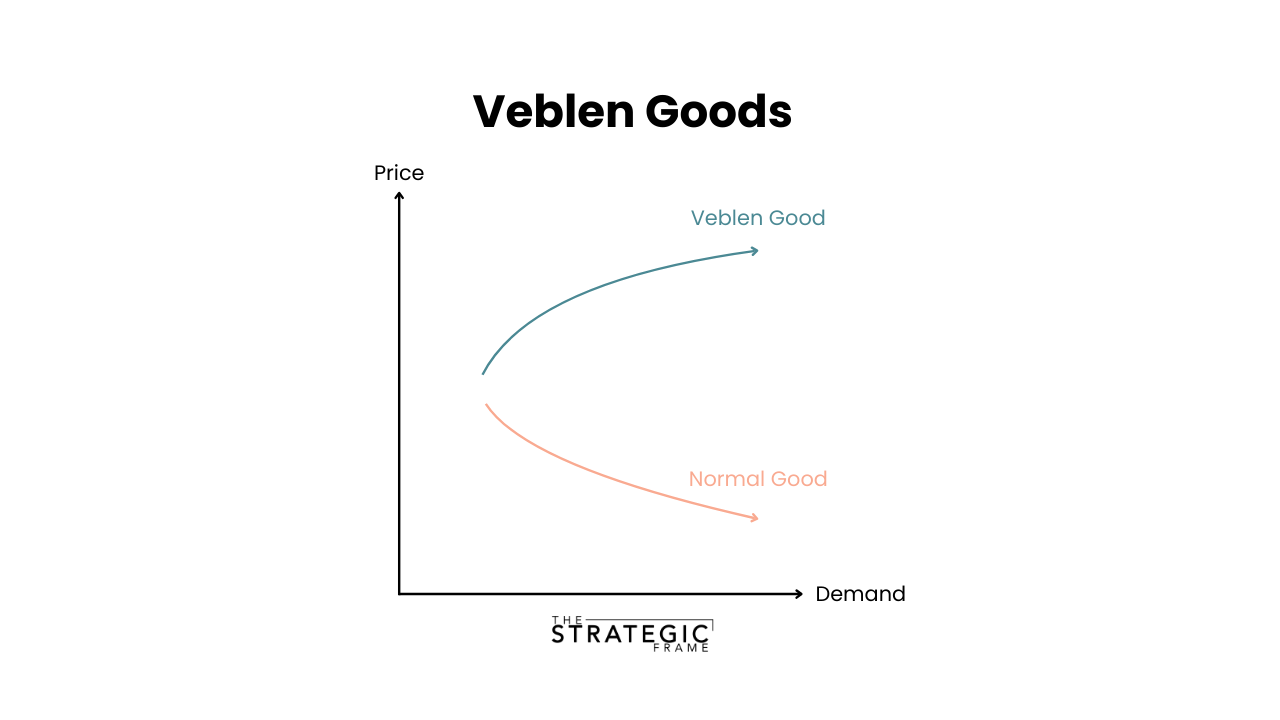
Veblen Goods
Veblen goods are products that become more desirable as their prices rise, because high cost signals exclusivity, quality, and status. While often associated with luxury brands like Rolex, the concept also applies outside luxury, as shown by Beckman Instruments, which boosted sales by raising prices to signal quality. By elevating pricing, signaling excellence at every touchpoint, and controlling distribution, brands can leverage the Veblen goods effect to increase demand.
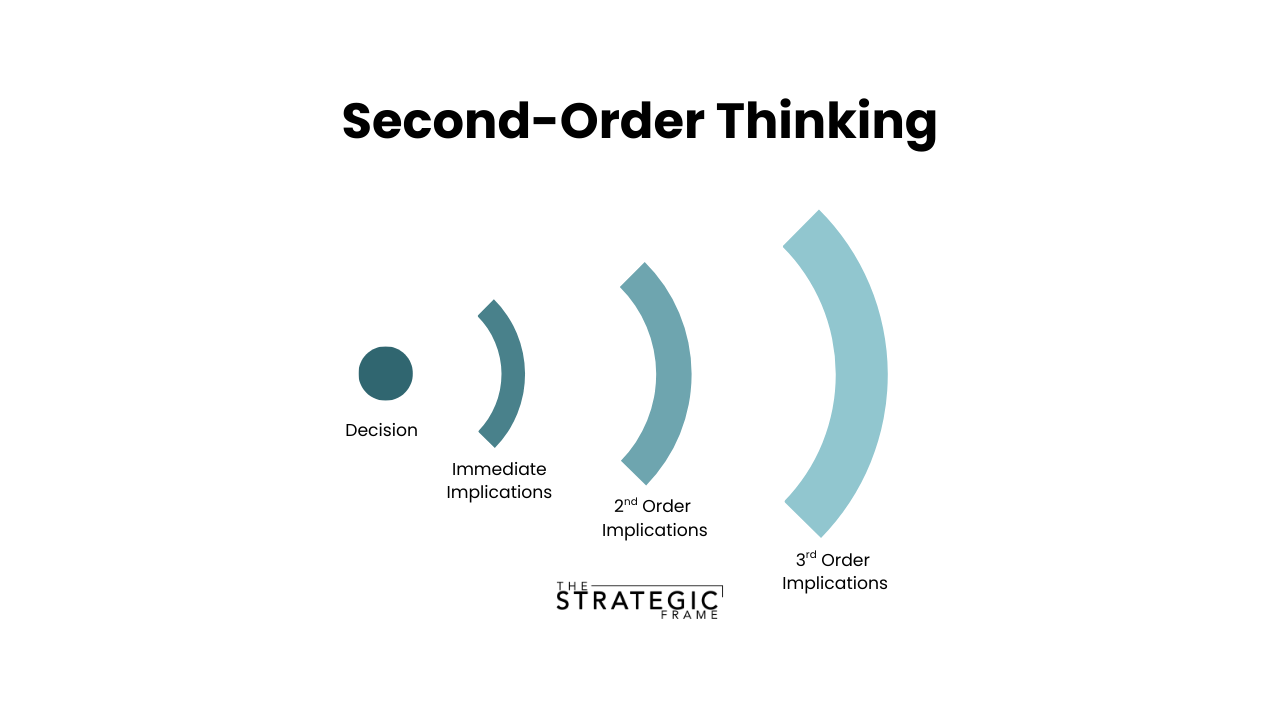
Second-Order Thinking
Second-Order Thinking is the ability to look beyond immediate results and consider the ripple effects of your decisions. Netflix’s controversial split of its DVD and streaming services in 2011 hurt in the short term but positioned the company for long-term dominance. Asking “And then what?” repeatedly is a powerful way to make more strategic choices.
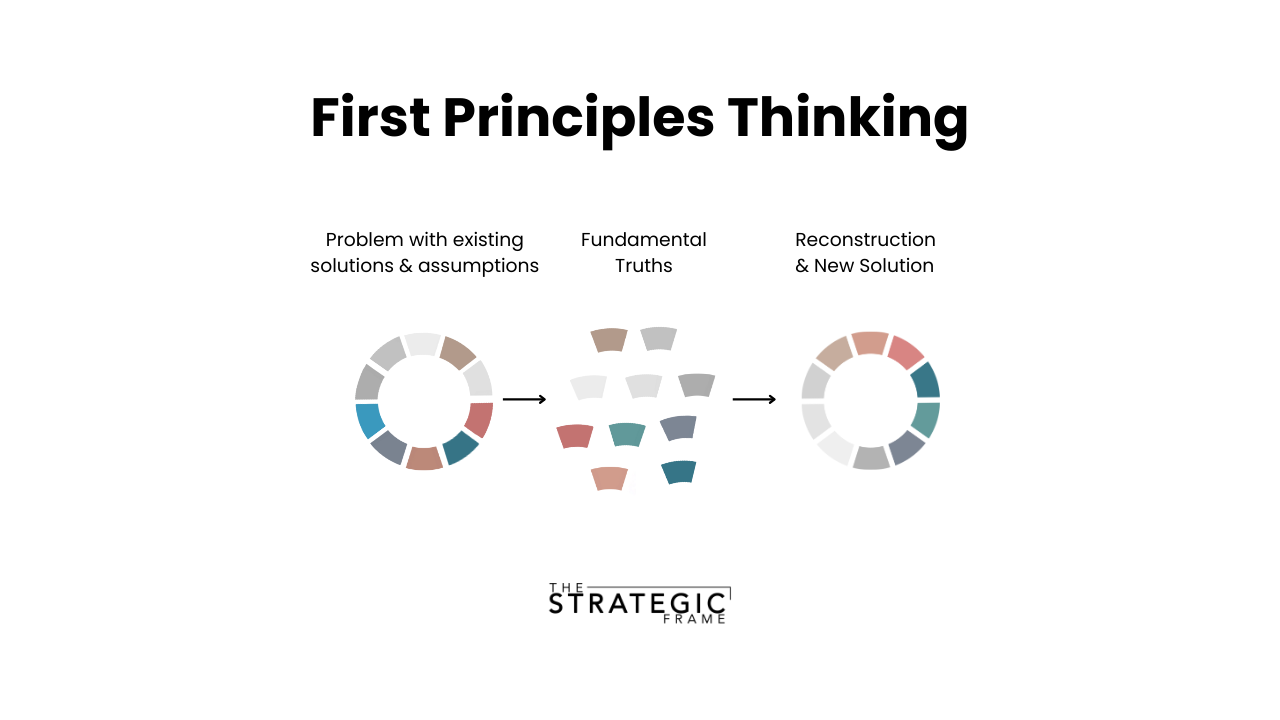
First Principles
First Principles Thinking is a method of solving problems by breaking them down to their core truths, then rebuilding from the ground up. It helps you move beyond assumptions and conventional wisdom to find truly original solutions. Companies like Dyson and Liquid Death used it to redefine their categories by rethinking from scratch rather than tweaking what already existed.
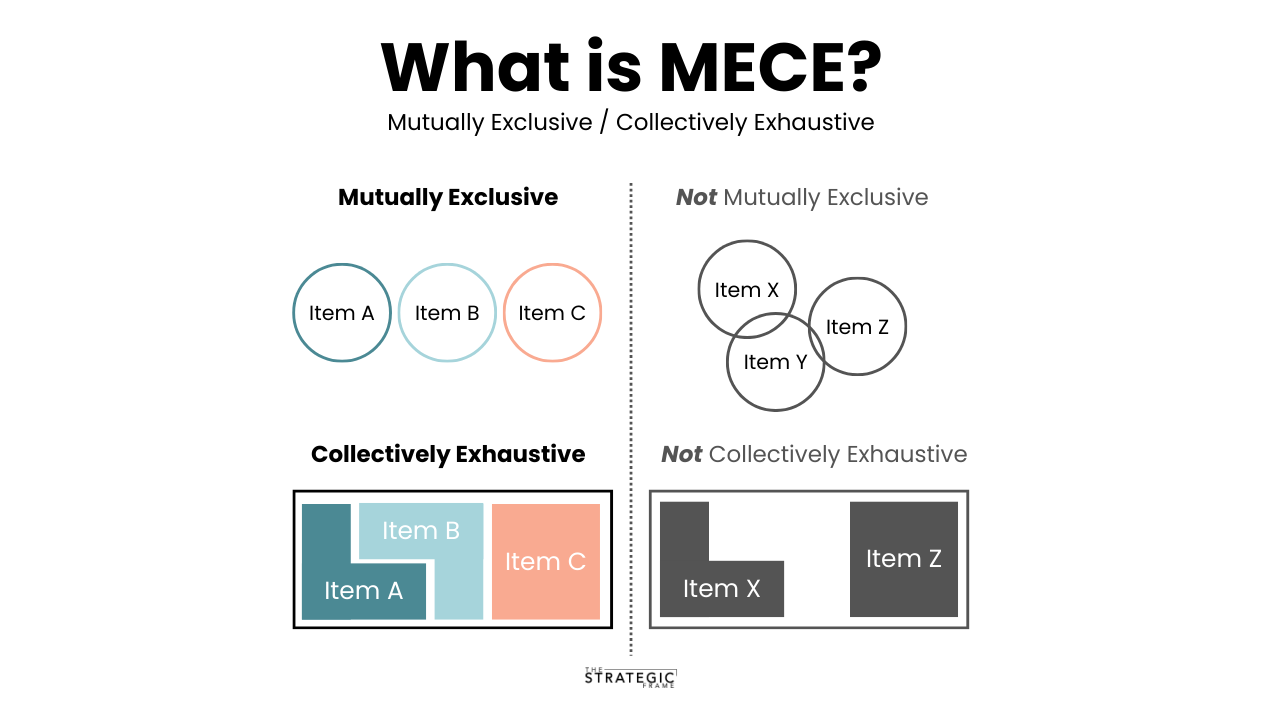
MECE
MECE stands for “Mutually Exclusive, Collectively Exhaustive,” and is a problem-solving framework that helps break down complex issues with clarity and structure. For a set of options, each item must be Mutually Exclusive (there’s no overlap) and Collectively Exhaustive (all possible options are present). This framework is useful to use when you have a complex problem you’re trying to solve, or you have a solution in mind and want to know how it fits into your overall goal.